
Lem Next Gen
Science Forum

April 28-29, 2026

Wrocław

Free of charge

#LemForum

Wrocław Tech invites you to the Lem Next Gen Science Forum — a meeting ground for those who dare to shape the future.

This unique Forum is created for young scientists and by a community that believes in their potential. It is a space where students, PhD candidates, and early‑career researchers take the lead, present their work, and actively shape the future of science.

Meet visionary peers and mentors, explore bold interdisciplinary ideas, and ignite innovations that matter to your generation. Join us in a place where young scientists and students come together as the driving force behind the science of tomorrow.

Deadline Alert – Submit Your Abstract by March 10, 2026!

Don’t wait until the last minute! The abstract submission deadline for the Lem Next Gen Science Forum is March 10, 2026 — and it’s coming fast.
 

Participation in the conference is free of charge.

Please, remember the following important dates:

  • March 10, 2026: deadline for submitting abstracts

  • March 30, 2026: information whether the abstract has been accepted/rejected

  • April 15, 2026: deadline for corrections to abstracts

  • April 28-29, 2026: conference dates.

Speakers

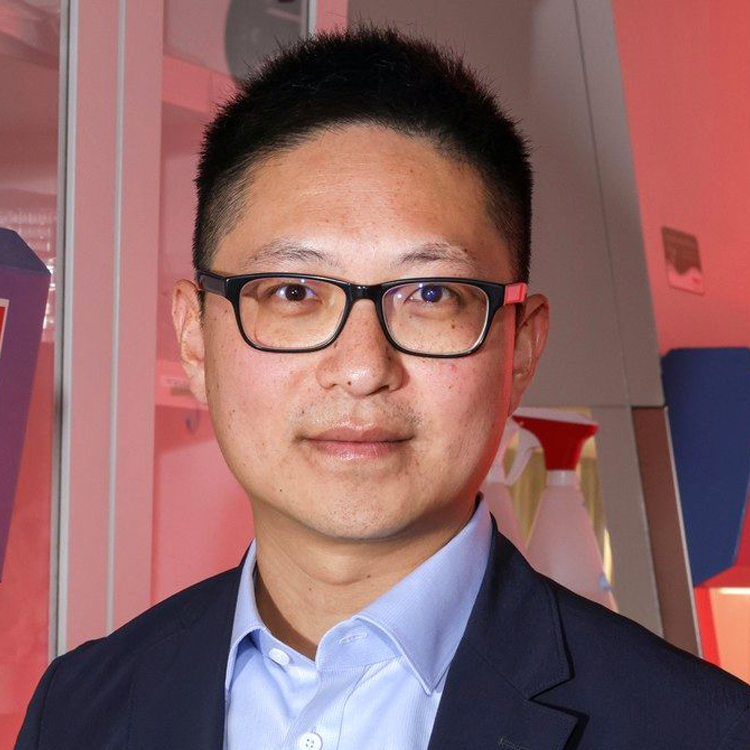
Li Tang

received his B.S. in Chemistry from Peking University, China, in 2007, and Ph.D. in Materials Science and Engineering from University of Illinois at Urbana-Champaign, USA, in 2012, under the supervision of Prof. Jianjun Cheng.
He was a CRI Irvington Postdoctoral Fellow in the laboratory of Prof. Darrell Irvine at Massachusetts Institute of Technology during 2013-2016. He joined the faculty of Institute of Bioengineering, and Institute of Materials Science & Engineering, at École polytechnique fédérale de Lausanne (EPFL), Switzerland, as a Tenure-Track Assistant Professor in 2016, and promoted to Associate Professor with tenure in 2022. He is currently the Vice Dean for Innovation and Director of Innovate4Life program at School of Life Sciences, EPFL.

His research focuses on developing multidimensional immunoengineering approaches for enhanced cancer immunotherapies. The central paradigm of cancer immunotherapy for decades has been the exclusive focus on “type 1” immunity. While powerful, this approach has inherent limitations, leaving many patients with relapsed or incurable disease. The Tang lab discovered that a completely different, and largely neglected, arm of the immune system—type 2 immunity—holds the key to achieving lasting cures. The IL-10-expressing CD19 CAR-T cells they developed have achieved breakthrough clinical efficacy at extremely low doses in several on-going Phase 1 clinical trials. Dr. Tang is the recipient of Friedrich Miescher Award (2025) from Life Sciences Switzerland (LS2), Leenaards Prize for Translational Medical Research (2025), Biomaterials Science Lectureship (2025), CAB Mid-Career Investigator Award (2024), Biomaterials Award for Young Investigators (2024), Cancer Research Institute CLIP Award (2021), Anna Fuller Award (2021 and 2022), European Research Council (ERC) Starting Grant Award (2018), and named in the MIT Technology Review’s “Top 35 Innovators under Age 35” list of China region (2020).

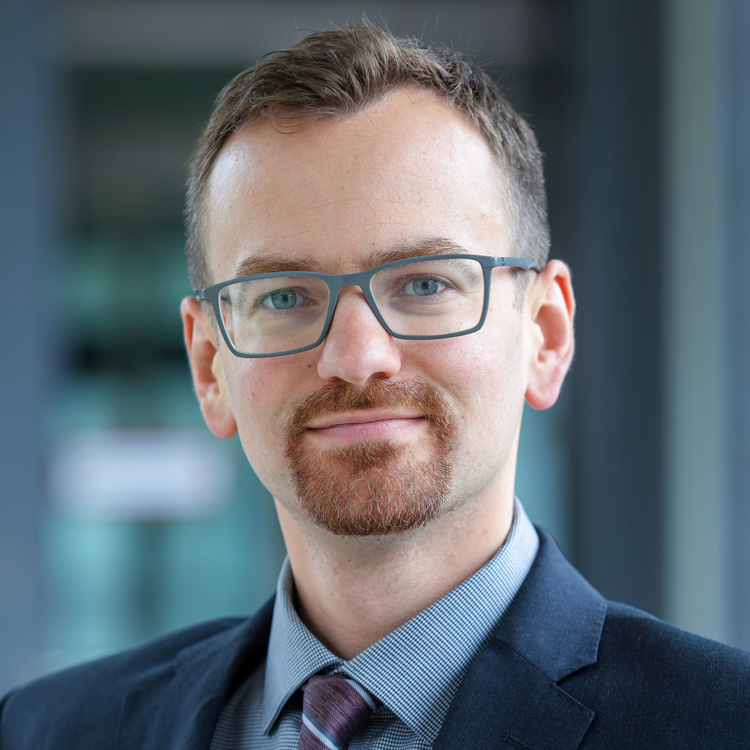
Tobias Dornheim

has earned a PhD in theoretical physics from Christian-Albrechts-Universität zu Kiel (Germany) in 2018. Since 2025, he is head of the High Energy Density (HED) department of the Institute of Radiation Physics at Helmholtz-Zentrum Dresden-Rossendorf (HZDR).
 Dornheim’s work focuses on the development of novel methods for the description of quantum many-body systems and on the development and application of advanced x-ray scattering diagnostics for experiments with extreme states of matter. (laserfusion, laboratory astrophysics, etc.). His work has been recognized among other things with the Stanislaw Lem European Research Prize in 2024, with the John Dawson Award for Excellence in Plasma Physics Research by the American Physical Society (APS) in 2021 and with a Starting Grant from the European Research Council (ERC) in 2023.

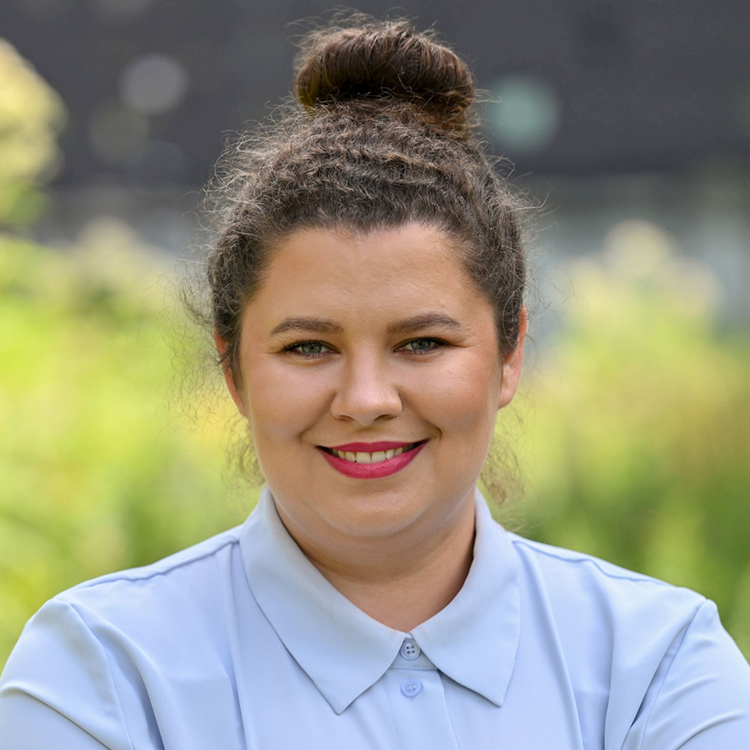
Anna Siekierka

is a specialist in chemical engineering and membrane technologies at the Faculty of Chemistry, Wrocław University of Science and Technology. She obtained her PhD in 2019 and her habilitation degree in 2025. Since 2025, she has held the position of university professor.
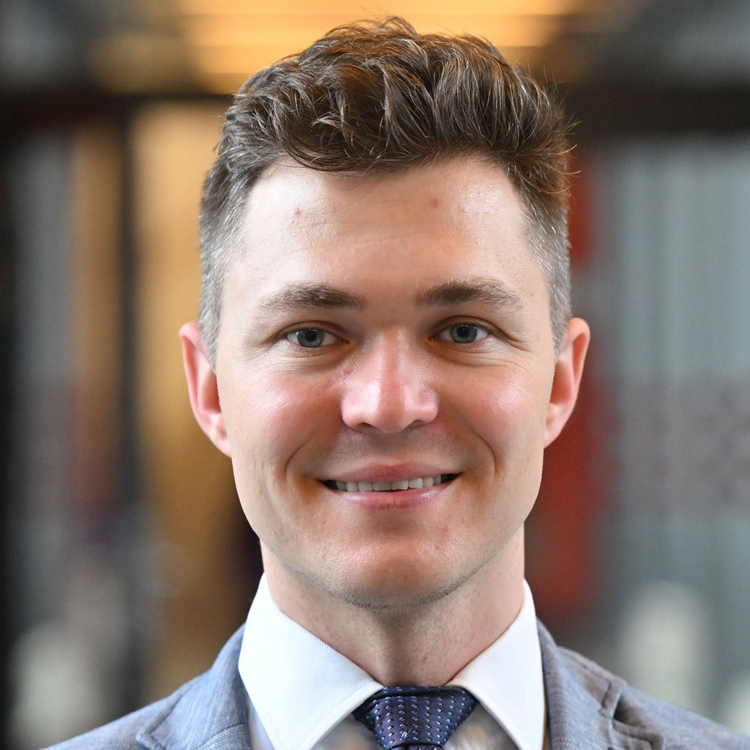
Her research focuses on electro-membrane processes, selective separation of metal ions, and energy recovery. In particular, her work addresses innovative electrodialysis systems and battery recycling, including pioneering research on hybrid capacitive deionisation for lithium recovery and the development of ultra-selective membranes for battery recycling applications.

Dr hab. Eng. Anna Siekierka leads research projects funded by the European Research Council (ERC Starting Grant ReHeal4waste) and the Polish National Science Centre (NCN). She has completed research fellowships abroad, delivered invited and keynote lectures, and received numerous awards and distinctions, including the prestigious TOP 2% Scientist 2024–2025 recognition. She is the author of over 40 scientific publications, with an h-index of 18.

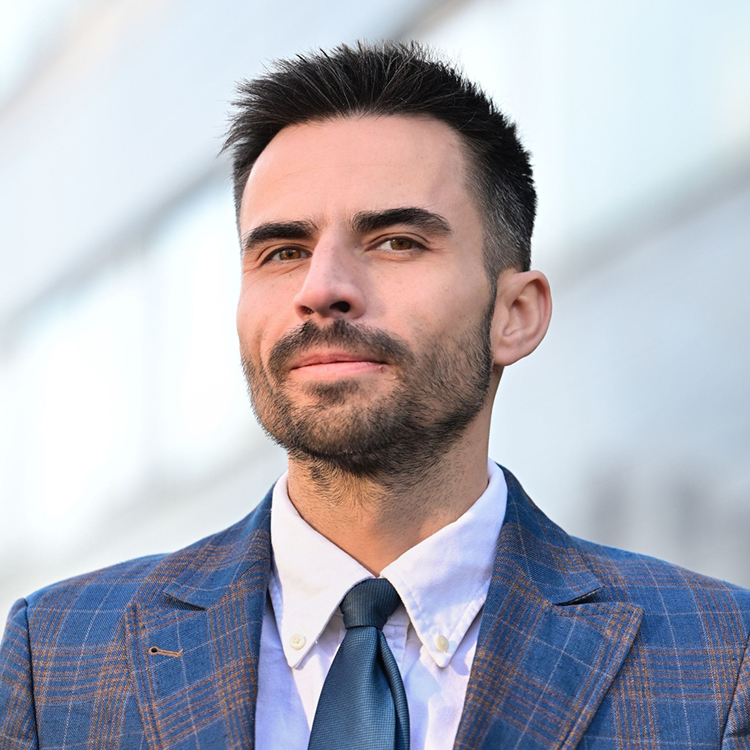
Łukasz Sterczewski

is an electrical engineer working on terahertz radiation and semiconductor lasers in the Faculty of Electronics, Photonics and Microsystems at Wrocław University of Science and Technology. He is a former researcher at NASA Jet Propulsion Laboratory serving now as a university professor at his alma mater.
Sławomir Porada

is currently an associate professor at the Wroclaw University of Science and Technology in Poland, having received his PhD in engineering sciences from the same institution in 2013.

During the period of 2009 to 2013, he conducted his doctoral research at the European Center of Excellence for Sustainable Water Technologies – WETSUS in the Netherlands, and subsequently was Alexander von Humboldt Program Fellow at INM – Leibniz Institute for New Materials in Germany from 2014 to 2015. From 2017 to 2019, he was a fellow of the VENI program at the University of Twente in the Netherlands, and from 2020 to 2022, he was a scientific project manager at WETSUS in the Netherlands.
The research interests of Dr. Porada focus on materials science, electrochemistry, and electrochemical engineering. Specifically, he is interested in research on selective separation processes via electrochemical methods, water desalination using reverse osmosis, and, more recently, energy transition topics such as hydrogen generation via water electrolysis and carbon dioxide capture.

Anna Kuppuswamy

leads the Neurobiological and translational fatigue research laboratory at University of Leeds, United Kingdom.

Trained as a physiotherapist in India, with a PhD in Neuroscience from Imperial College London and postdoctoral training at National Institutes of Health, USA, she established her research group at UCL funded by the Wellcome Trust Henry Dale fellowship in 2016. In 2021 she was elected to the Young Academy of Europe, of which she is now chair. In 2023, she moved her group to University of Leeds where she teaches and continues to research fatigue.

Organizing Commitee

  • Katarzyna Matczyszyn CHAIR
  • Mariusz Hasiak VICE-CHAIR
  • Honorata Poturaj SECRETARY
  • Katarzyna Weron   
  • Krzysztof Walkowiak     
  • Agnieszka Wyłomańska
  • Magdalena Kasprowicz
  • Artur Bednarkiewicz
  • Egbert Piasecki
  • Weronika Urbańska       
  • Izabela Walendzik
  • Aleksandra Szafran-Gęgotek     
  • Marta Staszczak-Gębala              
  • Anna Hejno  

Partners and patronages